

Partner Conflict
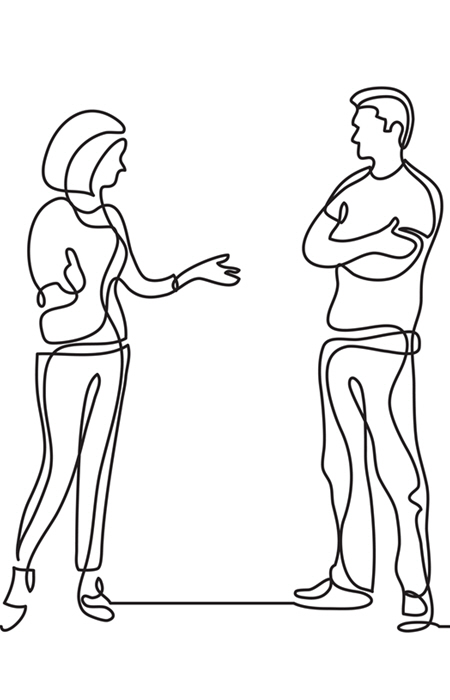 Conflict is a normal and essential part of life…
… and a relationship is no different.
But sometimes, conflict can become the source of great discontent when it seems like there’s not much more to the relationship than the conflict itself.
When two people become tangled up in each other – acting and reacting, stuck in the dynamics of a power struggle, or asserting who is right or wrong – we start forgetting what brought us together in the first place. Every conversation leads to an argument and more bitterness.
Not feeling seen or heard, or at times feeling like our partner doesn’t really care enough about us. The same argument and fight gets replayed a million times over but still no resolution.
The inability to disengage and resolve conflict often leads to repeated frustration, disappointment – angry words, loud voices, tears, storming out. Thoughts, actions, and feelings turn us against the other.
When our strategies for getting our needs met fail, we turn to the vicious cycle of blame, shame, and guilt. The relationship can be filled with criticism, contempt, and defensiveness, all lethal to a partnership’s foundation. Our emotions are all over the place, and it’s hard to see the other’s point of view.
Feeling sad or hopeless about the state of your relationship…
Chronic conflict can be exhausting – physically, mentally, and emotionally.
When we’re in a high-conflict relationship, we may experience feeling more irritable, or at times disappointed and frustrated. There was a time when all we wanted to do was spend time together. Now the tension cuts through the room like a knife, and we prefer to be by ourselves.
We seek closeness and want to reach out to the other person, but we get caught in the rut of the same old patterns of hurting each other and letting things escalate to the point of no return – ultimately feeling defeated, discouraged, and depleted.
If you can’t shake the feeling that something is amiss in your relationship…
… it can lead to a lot of turmoil and inner confusion about the state of your marriage or relationship.
This may cause you to minimize your pain, compare others’ relationships to your own, or feel confused about whether to stay or go.
You may wish your partner were different or fantasize about a different partner.
Unintentionally corroding your partnership, you may feel emotionally distant and hard to reach. Being critical of one another soon develops into contempt. Over time, this can impact your trust and commitment to the relationship.
Isn’t it ironic that the things we do to cope can sometimes take us even further from the goals of coming closer to the ones we love?
Good relationships take work, and couples who are truly committed to one another don’t have one foot out of the door.
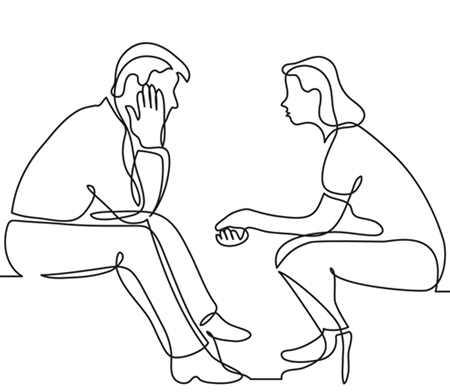 Strategies to help manage high-conflict relationships…
Few couples ever receive guidance on how to create or maintain a successful long-term relationship. And well-intentioned couples repeat the same old strategy that gets them nowhere and corrodes their bond over time.
You can’t heal when you’re building walls around each other. Lowering your expectations may reduce the conflict but will also make you feel even more frustrated and resentful.
Instead, holding your partnership to high standards allows you to achieve the kind of partnership you want.
Couples Therapy can help each of you figure out your role in the conflict and formulate strategies to support you in managing disagreements more effectively. Some things we may work on include:
Addressing conflict
Disagreements are inherent to relationships. At times, the same conflicts keep emerging, and the more you talk about them, the more frustrated and hurt you feel.
Becoming more entrenched in your individual position over time, you become more polarized and extreme in your views and less willing to compromise or see things differently.
Here, individual therapy can be an opportunity to differentiate between the solvable problems and those that are non-negotiable. We will also explore ways to soothe each other and show up emotionally for one another while trying to come to a place of compromise and flexibility.
Talking about sex and intimacy with more ease
All couples long for a happy and satisfying sex life, but communicating about it clearly can be a major obstacle to solving sex and intimacy problems. Being vague or indirect about our wants, needs, and desires, and expecting the other to figure it out can lead to more frustration, tension, and hurt.
In session, we will learn to talk about sex in a way that feels safe, gentle, and positive. We will also learn to be patient with one another and make accommodations toward one another, including refusing sex gently and learning to cope with refusal.
Stop fighting about work and money
Money is one of the top issues that causes conflict in couples. When one of you believes in spending money to enjoy life and having fun, and the other views spending as impractical with values of a minimalistic, frugal lifestyle, conflict erupts.
Differences in finances define our values of living for the moment or being a planner and more conservative. Therapy can help clarify what these values mean to each of you, where they come from, and how to find good middle ground, so you both can co-exist together.
Knowing if you’re ready to create a family
The decision to have a child or not can be a deal-breaker for many couples. Many, if not all, couples have had those conversations before marriage but can be faced with a difficult decision about when is a good time. When one partner feels more ready than the other, it creates impatience and resentment in their bond.
Therapy helps gain clarity of hidden fears about parenthood and what it may involve. It’s also a place to express your values and needs from your partner in terms of family and parenting styles.
Overcoming infidelity, broken trust
Overcoming the devastation of disloyalty and the pain of infidelity is not a task for the weak-hearted – especially if you have decided to try again to make it work. Rebuilding from a place of pain and trying to fix what feels broken is hard to do when we’re still feeling the burn of betrayal.
Therapy can be a place to talk about how you experienced the breach of trust, how it has impacted you and your connection with one another. It is an opportunity to understand your unique contributions to where you are and use that to create a plan for accountability and a renewed commitment to the relationship.
 You can’t change your partner…
… but you can improve the quality of your life and relationship by changing your expectations, watching your reactivity, learning to soothe yourself, and perhaps making peace with certain things.
I’m here to help you do that. I also offer treatment for depression, anxiety and relational trauma in NYC. Learn to create a love that lasts and grows over time. Get your relationship up and running again!